
Last Updated: April 2026
Quick Navigation: Why Solo Queue Fails | What Real Coaching Looks Like | What to Look For | Rank-Specific Guide | Act 3 Timing | Find a Coach | FAQ
You have the aim. You know your agents. You've watched the pro VODs, bought the KovaaK's pack, and you're still sitting in the same rank you've been in for three Acts.
Sound familiar?
Here's what's actually going on: valorant coaching — real coaching — isn't about mechanics. It's about the decision-making habits you've burned into muscle memory through hundreds of solo queue games. And grinding more solo queue just makes those habits deeper.
The fastest way out? Stop playing alone and start playing with someone better.
Why Solo Queue Keeps You Hardstuck
Valorant's 2026 ranked system runs on a hidden MMR underneath your visible RR (Rank Rating). When your MMR is higher than your visible rank, you gain 20–30 RR per win and lose only 10–15 per loss. When it's lower, the reverse happens — and that's why "hardstuck" feels impossible to escape.
The problem with solo queue: it trains you to play around bad teammates, not to play the game correctly.
After 300 games, you've learned to:
- Hold passive angles because "my team won't trade"
- Skip buy rounds because "they'll just throw anyway"
- Go quiet on comms because nobody's listening
- Force carry or die trying, every round
None of that is right play. And a coach — or a better duo partner — will call it out within the first two rounds.
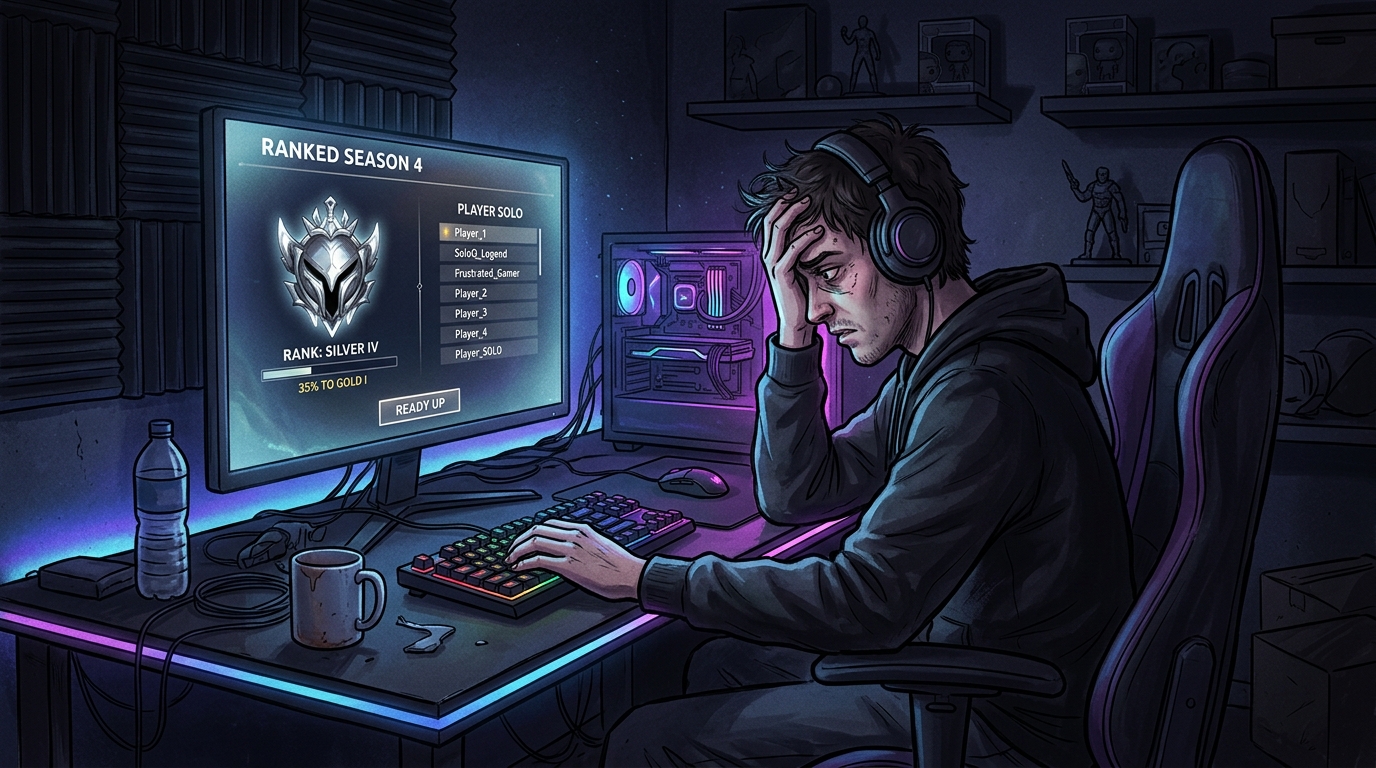
Solo queue doesn't break bad habits — it reinforces them.
What Real Valorant Coaching Actually Looks Like
Most people imagine coaching as: watch my VOD, tell me what I did wrong.
That exists. And it has value. But it has a ceiling.
Knowing you made a mistake at round 14 timestamp 2:43 doesn't fix the reflex that caused it. The feedback loop is too slow.
The coaching that actually moves rank happens in real time:
- "Two pushing B short — fall back to A heaven now, not after you peek"
- "Your utility is going to waste here — smoke site entrance, not mid"
- "You've been over-peeking this angle every round, they're reading you"
You can't get those callouts from a recording. You can only get them from someone playing alongside you who's watching the same game state.
Tracker.gg rank distribution data consistently shows that players who duo queue with someone 1–2 ranks higher have meaningfully faster rank progression than consistent solo queuers at the same skill level. The information transfer happens live — and live information changes behavior faster than post-game analysis.
What to Actually Look for in a Valorant Coach
Not everyone calling themselves a Valorant coach is worth your time. Here's what separates the coaches who actually help from the ones who just make you feel worse:
1. They play your role, not just a high rank
A Diamond Jett main has exactly zero useful advice on Viper lineups. If you're a Controller player, find someone who's put hours into Controller. Role-specific knowledge matters more than rank alone.
2. They coach habits, not just mistakes
Bad coaching: "You died there because you peeked too early."
Good coaching: "You've peeked that angle early seven rounds in a row. They're baiting you and it's costing you two rounds per half."
The pattern is the problem. Single-round feedback is noise.
3. They play with you — not just review you
The faster improvement path is live play. Seeing someone model correct rotations, utility usage, and default setups in real time rewires how you think about the game. Watching footage of yourself doing things wrong is slower.
4. They've been to the rank you're targeting
Someone who hit Immortal and dropped back to Diamond understands what Diamond demands from personal experience. Someone who hit Platinum and is coaching you to Diamond is guessing at the next step. Ask where they peaked.
⚡ Pro Tip: Before your first session, write down 2–3 specific moments from your last game that felt wrong — a death you couldn't explain, a round where your team never connected. Bring those to your coach. Coaches who work from concrete examples move you faster than ones who just watch you play cold.
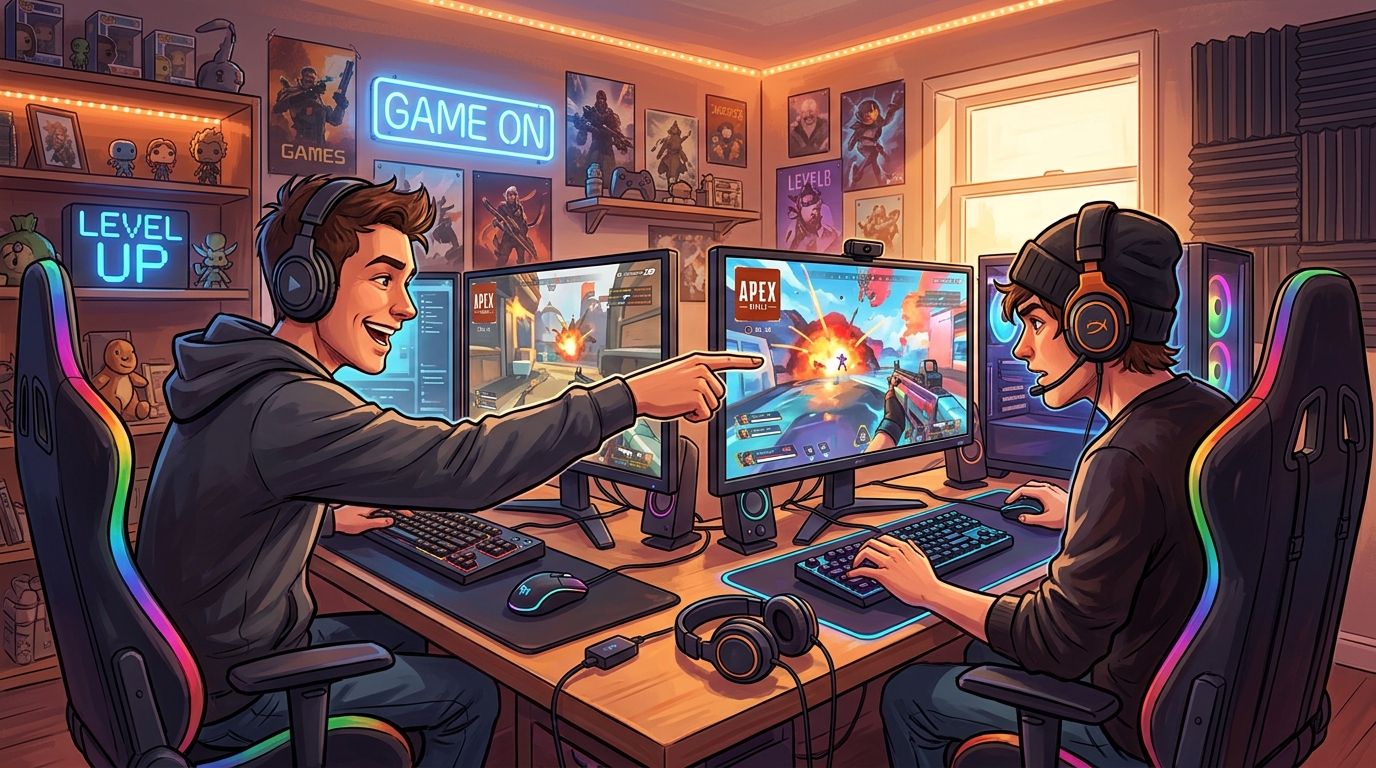
Real-time feedback from a duo partner hits differently than post-game VOD review.
The Rank-Specific Problem (And What Coaching Fixes)
Every rank tier has a specific problem. Generic advice fails because it doesn't address where you are:
| Rank | Core Problem | What Coaching Should Target |
|---|---|---|
| Iron–Bronze | Crosshair placement, shooting fundamentals | Mechanical habits — repetition until automatic |
| Silver–Gold | Inconsistency, poor economy, tilt | Pattern recognition, buy discipline, mental reset habits |
| Platinum–Diamond | Solo-queue habits, weak defaults | Team coordination, utility timing, reading round states |
| Ascendant–Immortal | Late-round micro-decisions, clutch reads | Map state awareness, adaptation, site execution |
If you're Plat and below: your coach's first job is mechanical. Crosshair placement improvements alone move players 1–2 full ranks when done consistently. The Valorant rank distribution shows Gold and Platinum combined represent roughly 40% of the playerbase — which means half the players stuck there have the same fixable problems.
If you're Diamond and above: you're past mechanics. Your coach's job is breaking the habits your 500 solo games built — and that takes someone who can watch you play in real time and catch the moments you default to "solo carry mode."
The biggest unlock at every rank: having a teammate who actually communicates.
That's where Tapin's verified Valorant players come in. Not a coach lecturing you through a session — a real player at your target rank who queues with you, calls out what they're seeing, and models what structured play actually looks like. You improve by doing, not by reviewing.
Act 3 Just Started — This Is the Best Time to Use Coaching
Patch 12.08 just dropped, marking the start of Valorant Season 2026 Act 3. Ascent is back in the competitive map pool. Bind is out. Skirmish: Ascension is the new experimental ranked mode.
Act resets are the single best window to accelerate rank gains. Your first five placement matches each Act have amplified RR impact — the matchmaker uses them to recalibrate your visible rank against your MMR. Playing those placements with a strong duo partner instead of in solo queue is the highest-leverage move you can make.
I believe this window — the first two weeks of a new Act — does more for your rank ceiling than any single coaching technique. Play your best maps, with your best agents, alongside someone you can actually coordinate with.
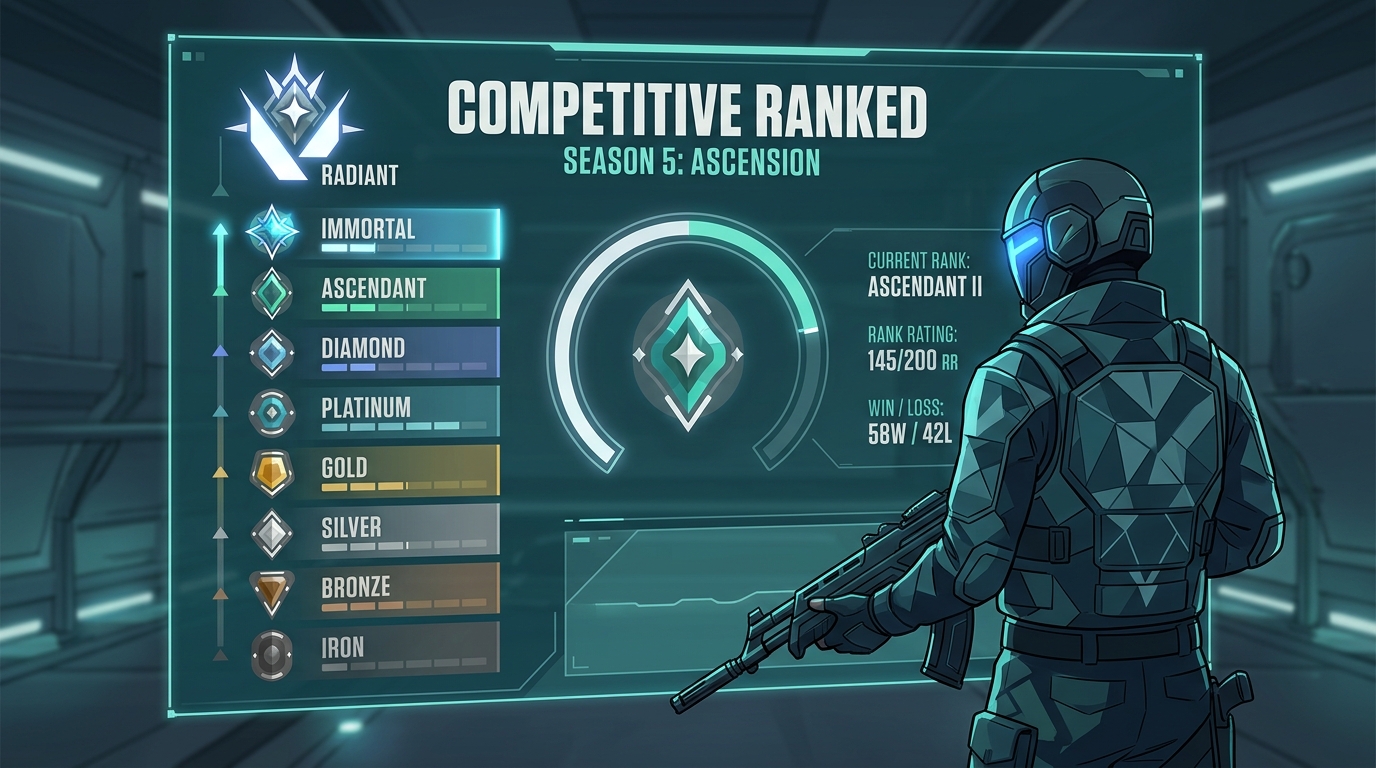
Act resets are the highest-leverage window to push your rank — especially with a strong duo.
How to Find a Valorant Coaching Partner That's Worth It
Here's the short version of what to avoid:
❌ Random Discord "Immortal coaches" — no accountability, inconsistent quality, often just looking for easy money
❌ Sites that let anyone list themselves — without verification, "Diamond" means nothing
❌ One-and-done review sessions — improvement takes repetition, not a single session
And what to look for instead:
✅ Verified rank with play history — they can back it up in-game, not just a screenshot
✅ Real duo play, not just coaching — they play alongside you, not just watch you
✅ Role/agent match — they know the agents you actually play
✅ Consistency — 3–5 sessions over 2–3 weeks beats one long session
For casual-to-competitive players who want to climb without hiring a full-time analyst, Tapin connects you with skilled Valorant players who queue alongside you. No lecture. No awkward VOD session. Just someone who knows the game and is there to play it with you.
If you've been reading about duo advantages and want the full breakdown of how to use a duo partner to climb, our complete Valorant duo partner guide covers the mechanics in detail. And if you want to know what agents are worth picking up with a new duo right now, our Valorant Miks guide covers the Act 2 addition that's reshaping Controller play in Act 3.
Find someone who plays your role, knows your rank, and queues with you — not just analyzes you.
FAQ: Valorant Coaching
Is Valorant coaching worth it for lower ranks?
Yes — with a caveat. At Iron through Silver, mechanical fundamentals move you faster than any tactical coaching. Find someone who focuses on crosshair placement, utility habits, and consistent buy decisions. Once those lock in at Gold, tactical coaching becomes exponentially more valuable.
How long does it take to see results from Valorant coaching?
Most players who run 2–3 coached duo sessions per week see consistent rank movement within 3–4 weeks. The real variable is how well you're applying the habits between sessions — improvement compounds fastest when you're actively thinking about what you worked on.
What's the difference between a Valorant coach and a booster?
A booster plays on your account to inflate your visible rank. A coach or duo partner plays alongside you to improve how you actually play. One gives you a fake rank that collapses the moment the booster stops. The other changes your decisions permanently.
What rank do I need to be for Valorant coaching to help?
Every rank has a specific problem coaching addresses. Iron and Bronze need mechanical habits. Silver and Gold need consistency and mental game. Platinum and Diamond need to break solo-queue habits. Ascendant+ needs micro-decision tuning. There's no "too low" — the type of coaching just shifts.
Is it better to get a traditional Valorant coach or a duo partner?
Depends on your learning style. Traditional coaching with VOD review gives you structured curriculum and one-on-one analysis. A duo partner gives you real-time feedback during actual games. Most players improve faster with the duo partner model because the feedback loop is immediate — you make a mistake, you hear about it in the moment, you adjust the next round.
Grinding ranked forever with the same habits just digs the same ruts deeper. Valorant coaching — real coaching — breaks those patterns by putting you in the game alongside someone who can call them out the moment they happen.
Act 3 just started. Placements matter. This is exactly the window to stop grinding alone.
Find your Valorant duo on Tapin and see how fast your game moves when you're actually playing with someone who knows what they're doing.